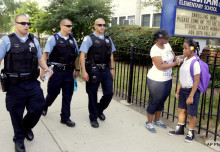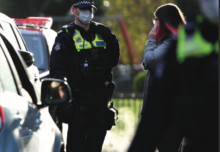
Claims by Victoria Police that they will not tolerate racial profiling have been debunked by new research showing that 12 years after police committed to eliminate the practice, young men of colour are still routinely being disproportionately stopped, searched and questioned.
In 2013, Victoria Police command said the force would undergo systemic change following the settlement of a court action taken by six young men of African background who were living in public housing in Flemington.
That settlement resulted in a multi-year response to the issues raised in the court case where it was to be alleged that police had engaged in racial discrimination when they stopped, searched, questioned, arrested and used force against them.
But 12 years later racial profiling continues to be a problem, according to research published by Inner Melbourne Community Legal and the Police Accountability Project.
Dr Tamar Hopkins examined the actions taken by Victoria Police in response to what became known as the Haile-Michael Settlement after the two men who initiated the legal action in 2008.
The data shows substantially disproportionate rates of police searching people from African, Middle Eastern, Pasifika and Aboriginal and Torres Strait Islander backgrounds when compared with Caucasian people.
These findings contradict claims by Victoria Police that the force has “zero tolerance for racial profiling”.
With police having gained sweeping powers to conduct random searches without a warrant of anyone who enters the Melbourne CBD, concerns that Aboriginal people and people from African, Pasifika and Middle Eastern backgrounds will be discriminately targeted are well-grounded, said Nadia Morales, Chief Executive Officer of IMCL.
“Police had a chance to get this right more than a decade ago, but they dropped the ball, and this research shows that things are back where they started when it comes to racial profiling,” Ms Morales said.
“How can the community have any confidence in police statements about ‘zero tolerance’ when they are contradicted so strongly by the evidence?
“The new stop and search powers following the declaration of the CBD as a designated area have the potential to further undermine trust of police by racialised communities who already feel they are unfairly targeted.”
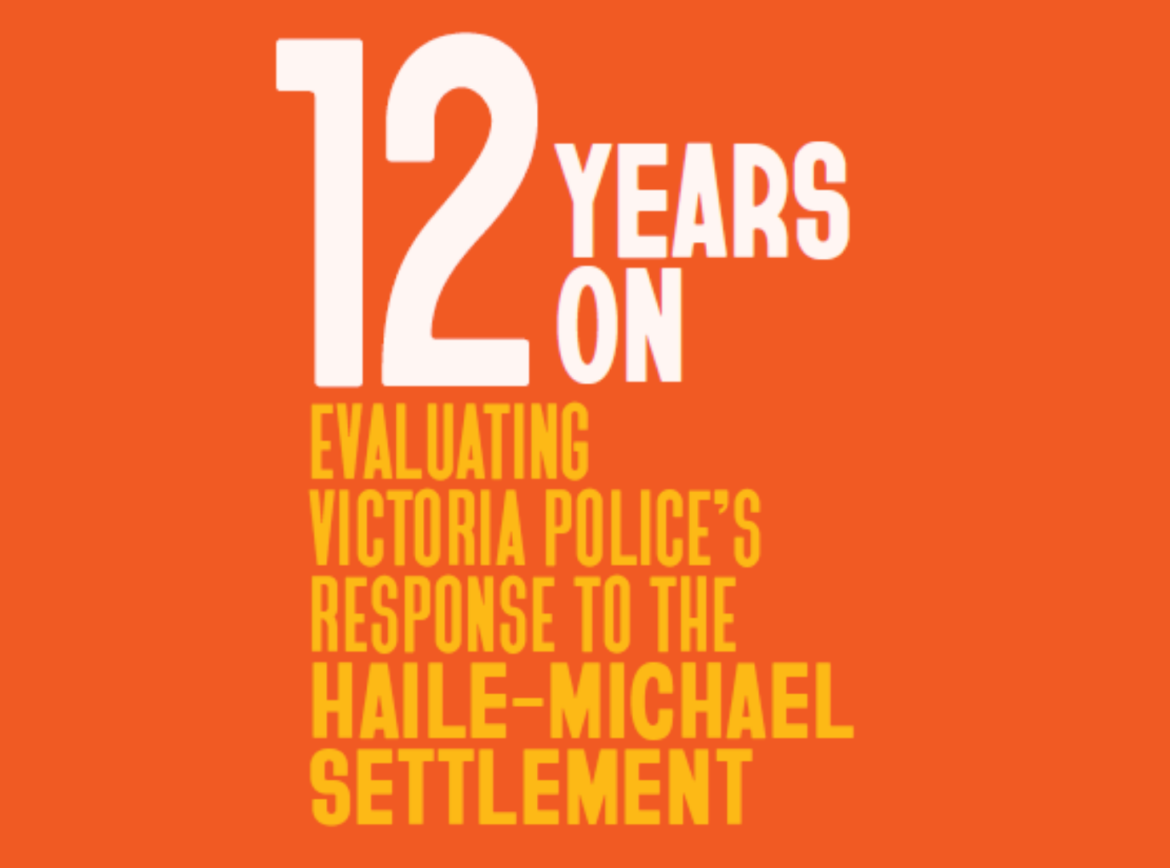
The new report, 12 Years On: Evaluating Victoria Police’s Response to the Haile-Michael Settlement, is based on an academic review of publicly available data, surveys and interviews with youth and community workers who with young people who have experienced racial profiling in and around inner Melbourne’s public housing estates.
It makes 12 recommendations including removing policing patrols from public housing estates, schools, youth services and mental health call outs; establishing an independent Police Ombudsman that can effectively investigate and hold to account any racial profiling and other forms of misconduct; and investing in community-led and culturally appropriate services.
“It took the bravery of a group of young African men to force Victoria Police to tackle its own systemic racism,” said co-authors Dr Tamar Hopkins and Ilo Diaz.
“But after a promising start, racial profiling is still taking place and young people living in Melbourne are being targeted by police simply because of the colour of their skin.
“Racial profiling is counter-productive and will further marginalise young people of colour who are at risk.”
Ms Morales said the Victorian Government needs to accept that police cannot be left to deal with the problem of racial profiling on their own.
“The discretionary powers of police need to be limited, and they need effective external, independent oversight and monitoring.
“Policing and police presence in communities should be reduced and in its place there should be investment in community-led responses to complex social issues.”